What’s Under the Covers?

February 3, 2011

As recently as a couple of years ago I was reading of a tragic murder with ties to my hometown.  The murderer was described as a “loner” with problems, “who kept a journal.”  The implication was that all persons who keep journals are immediately outside the realm of normal society and probably harboring all sorts of anti-social plots and extremist behavior.  Definitely people to mistrust.

There is a pervasive scorn for people who keep a journal, as if that automatically describes you as a secretive loner, self-absorbed and narcissistic, and—dare I say?—evil.  All the world distrusts the loner, the sheep which stands away from the flock, the individual who is not afraid to think for themselves, anyone who dresses or behaves in a manner that does not conform.

Certainly today’s diarist is being somewhat secretive.  Since virtually everything put on a computer is public information, the only privacy we have left is in our handwritten diaries.  Think about that.

Before the age of the personal computer, keeping diaries and writing letters was, if not commonplace, at least not suspect.  Up until the 1800s the only way to communicate, record and preserve information, or capture an image of what life was like, was to write it down or paint it.  (Photography evolved during the 1800s.)  The diaries I am reading from that era are short and simple records of the tapestry of daily life: “baked three pies, did washing, Herbert went into town, Mrs. Jones died,” and so on.  Many entries are only a sentence long.  Life was busy with work and I suspect there was little time for the “frivolity” of keeping a diary, especially in lower class homes.

The late 1800s witnessed the birth of contemporary psychology, and with it the gradual acceptance of emotions, (even the dark side of our nature), and a feeling of freedom to express them.  It would be interesting to research the change in the content of diaries from about 1900 to the 1960s.  Alongside the turmoil of the sixties and the “free love” and experimental happenings in this country, I believe the substance of journal writing changed drastically.  We were free not just to record what happened but how we felt about it.

I consider the late sixties and the seventies as the golden age of the journal.  The journals of Anais Nin were published and transformed the diary into an art form and a tool in self analysis.  They established the legitimacy of the diary as a genre of literature.  Tristine Rainer (who worked with Anais Nin) published The New Diary: How to use a journal for self guidance and expanded creativity.  Christina Baldwin published One to One: Self-Understanding Through Journal Writing.  The diary became an accepted, even encouraged, medium for deepening the experience of everyday life.

So, what has happened to the diarist since the advent of the personal computer and why are we once again scorned?  I see a movement toward “all things public” — we blog, we text, and it is all out there.  I think this is a step toward superficial and shallow thinking.  Undoubtedly there will be less self-examination or revelation of truth, both personal and otherwise.  What can you say when you know the boss could read it?

Despite the risk of being judged an anti-social personality, if you want to be free to express your innermost thoughts, to report life as you see it, I think it is best kept between the covers…of a journal.

Note:  Tristine Rainer and Christina Baldwin, two founding mothers of the golden age of the diary, are still actively involved in helping people tell their stories, write their memoirs, and deepen their lives with journal writing.  For more information visit:  Tristine Rainer’s – Center for Autobiographic Studies and Christina Baldwin’s – Storycatcher.

Introspection

January 22, 2011

INTROSPECTION


“An unexamined life is not worth living,” shouted Socrates.  While I cannot agree with that totally, throughout my life I have felt that a dash of introspection would help others to see, to understand, and ultimately to get along better with the other gorillas.


Most everyone likes that first cup of tea or coffee.   Just that ritual, of fifteen minutes a day spent in silent contemplation of the universe and our role in it, in a quiet corner, in a special chair, with no interruptions, would do wonders for our social interactions.


I began the habit over 20 years ago when my daughter was a holy handful.  I had to get up earlier than anyone else in the household in order to have the peace I needed and the time before work.  Usually I had a cat on my lap and a journal by my side.  After the coffee and meditation I would write in my journal.  I had to get up at 5 a.m. to do this, but as a morning person that was ok.  It was worth it.


Over the years the ritual has changed.  The location, time and duration alters.  My daughter grew up.  I am single.  The cats have changed.


For a few years I sat in the cold of an outbuilding on the farm and wrote in my journal while looking out a large window and being hugged by my cat.  Day by day I could see the changes in the natural world.  It was a Thoreauvian thing to do.  While the people-world moved ever faster, the natural world moved at a snail’s pace.  Thinking and feeling with the flow of nature achieved a balanced centering.  I had time to collect myself and my thoughts.


This kind of daily contemplation is quite similar to the serendipity of journal writing.   Not only do we contain multitudes, as Walt Whitman says, but the modern world has demanded that we assume so many different roles that it is difficult to separate who is “us” and who is “them,” or what we believe and what we are expected to believe.  Journal writing allows us to collect our scattered selves.


Although there has been some ridiculous psychology lately that claims introspection is bad for you I would take the opposite point of view.  Obsessive and shallow texting/ twittering/tweeting does nothing to establish deep connection with ourselves or others.   It is only by stepping back from the crowded room and the saturated airwaves that we may find out who we truly are and decide if our behavior is what we want it to be.  Only by mindful contemplation will we be able to discover the meaning in the events of our lives and come to understand the people in it.

Searching for Handwritten Diaries

January 21, 2011

I think now that anyone searching for old diaries might have better luck in heading for eBay than estate sales, although the price tag may be drastically different.  I have searched garage sales for 28 years and never found any diaries.   For my solstice/birthday present this year I asked for original handwritten diaries and low and behold I now have two more.

Prior to the holidays I scanned the items for sale on eBay and my hopes plunged as common things were bid over $50.

There was a set of diaries from a Michigan woman, late 1800s-early 1900s.  She visited Detroit (where I grew up) and Belle Isle and other locations I would be familiar with.  I thought it spoiled the historic value for the seller to divide them up.

There were diaries from New York from the 1800s.   The best of those was the diary of a housewife who was something of a busybody, but that trait made for great reading as she seemed to know everything that was going on.  The bidding rose to $180 and then I lost track of it.

Those diaries from the late 1800s and early 1900s vividly depicted how close life and death were back then.  Once a week, a death to report from accidents, childbirth and disease.   Sometimes Death just ran through a whole family.

I was also stunned to read about a horrific murder where someone broke into an old couple’s home and killed them, cut them to pieces, then set their house on fire.  I just didn’t think that kind of crime  happened back then.

I read parts of a diary from WW II — a soldier with a low opinion of the military who was offended by drunken soldiers, swearing, prostitution (especially a married commander sleeping with a girl), and appalling warnings about syphilis.

There was a sketchbook/journal from the Civil War.

There was a 1936 diary written by a 16 year old girl who had an insider’s view into the world of British diplomacy and the roots of terrorism in the Middle East.   The bidding on that one was up to $435,000 when I quit my search.  Obviously she had a reporter’s sense of history.  When I assume that there are enough people writing about local, national and international events I forget the value of an insider story.   I once had the chance to record a social phenomenon I was a part of and did not have the sense to do it.

The new diaries I was given will become a part of the diary archive.  The first was written in 1880 by Josephine Conklin of  Mount Morris, Livingston, New York.  She was born in 1850.  It is only 3 by 5 inches.  There is a lovely tintype and a photo with the diary.  The second diary was presumably written by Mrs. Herbert Abbott of Coloma, Michigan in 1934.  It is nearly 4 by 6 inches.

First Diaries Donated to the Diary Archive

December 14, 2010

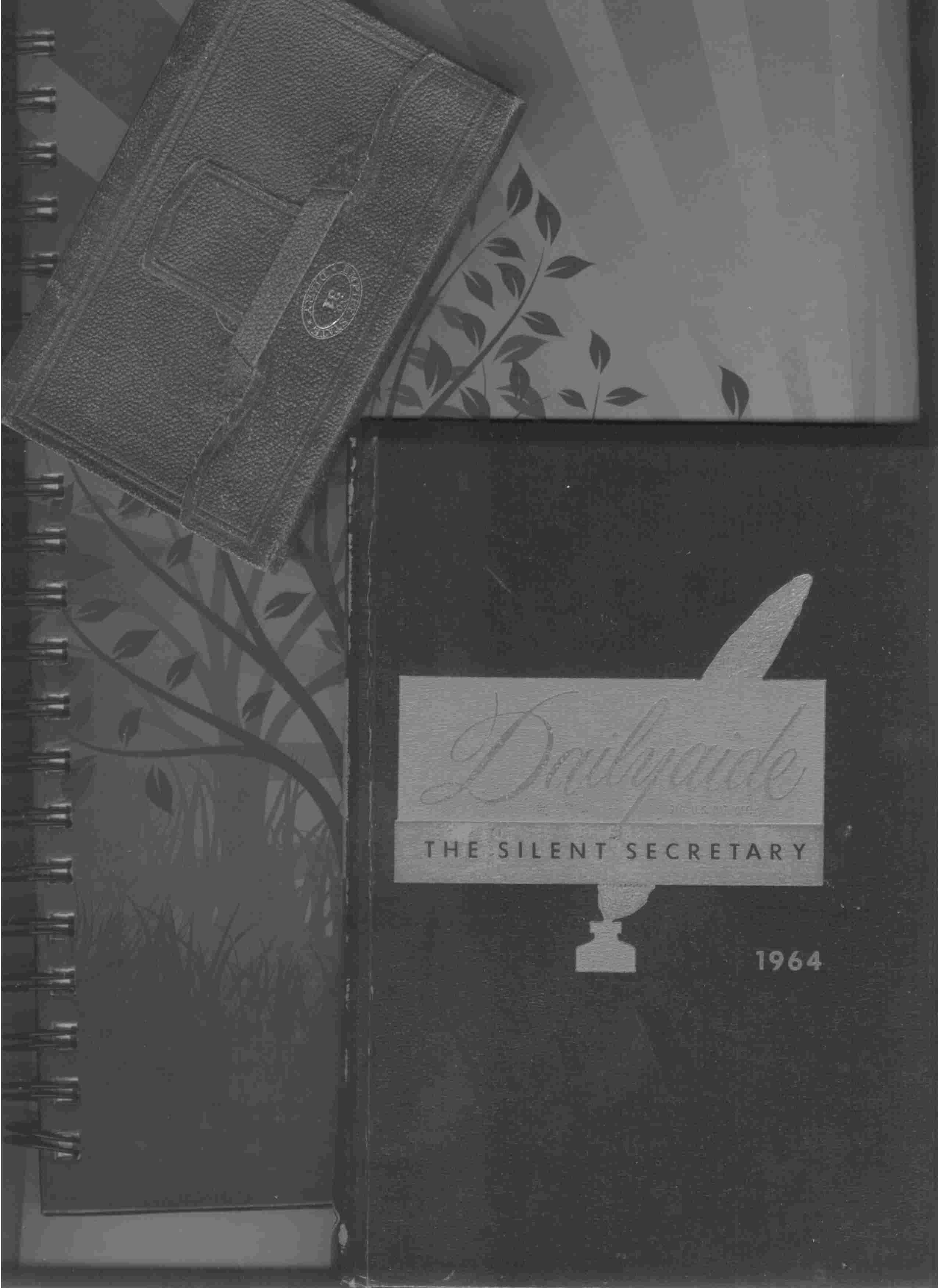
It is with great joy and sadness that I announce the very first diary that I will put in the diary archive.    The diary measures 3 by 5 inches and the date is 1873.  This diary was written by Mrs. Glode Duggar Chubb (Pamelia Pattison Chubb) of Wayne Michigan, who was my great-great grandmother.    She was 65 when she wrote this.

It would seem there is not much in this diary as each entry is 10 to 25 words long.  Yet it is astonishing how one can get a glimpse of daily life from just that.    Typical of diaries of this age, there is little emotion revealed.  It records the weather, everyday tasks, visits to and from neighbors which were daily occurrences, sickness and death, remedies (“beladonny for scarlette fever”) and the occasional excitement like “depredations” against temperance workers’ homes and a bit about grave robbers.

This treasure has come into my possession because of my mother’s recent death at 95-1/2.  Due to the frustrating lack of communication with her medical providers the family hastily flew to Florida as we could tell she was failing even as they were telling us they expected a return to her former independent living.  My respect for the medical community has reached zero this year. They have a severe lack of  social skills and empathy, not to mention diagnostic skills – even with all their fancy testing.

She died the day after my arrival as I was sitting with her.  That is a profound experience and I am still processing all of the emotions.  All of my thoughts and feelings about death and personal experiences with it are swirling about in my mind.   I wear my emotions on my sleeve.  When your parents die you become an orphan and that takes an adjustment in perspective.

My mother left behind a dozen journals and travel diaries as well as expense accounts,  which will also go into the archive.   I never realized she wrote everything down.   My mother may have been a genius.  Many very bright people, such as Thomas Jefferson,  tend to keep fastidious records.  Apparently she also kept every card anyone ever sent her.  (Note to self: throw out those cards now.)

I have begun reading my mother’s journals.  I am reading in 1939.  She is 24 years old and a young substitute teacher in the Detroit schools.   She taught English, Latin, geometry and algebra at that time.  She writes more than my great-great grandmother, but still few feelings are revealed.  She records when she gets up and goes to bed, meals, what she does all day (teaching, housework, dishes, visiting, shopping, events she attends, playing ping pong and beating all the men, etc.)  She drives, which surprises me.  She mentions seeing certain men that she is interested in.

May 5, 1939: “Parked near his house and talked till 1:10. Fortune teller’s prophecy mostly hospital-marriage.  I think I can love Sid.”   What a thrill.  I know the end of this story.  She married Sid Manuel and they celebrated 60 years of marriage.  They had three children and I am one of them.

Commonplacing

November 12, 2010

                                                    Commonplacing         

I was reading another biography of one of my favorite people — Thomas Jefferson —when I ran across a reference to his “commonplace book.”  He was a great collector of useful bits of information and copied ideas and quotes he admired from his reading into a notebook. 

What is a commonplace book?  It is a notebook/scrapbook that can include everything from quotes, passages from books, poems, letters, photos, art work, memorabilia, programs from events or news articles.   It can be a writer’s idea book.  In Poland, a related style of journal – the “silva rerum” (a “forest of things”) – was a multi-generational family journal of the nobility.

The commonplace book was popular in Jefferson’s day, though it has been around for a long time…probably as long as people have been inspired by great ideas or admired a writer’s turn of phrase.  Obviously it was necessary in the days before copiers.

With new technology we may be on the crest of a revival of this concept.  Just recently I have read that iphones are being used to store short diary notes, complete with photos, voice recordings or video.  A multi-media techno-journal!

Apparently, what I created during my high school years—about when I was learning to type—was a “commonplace book.”  I didn’t know the name for it.  I began collecting quotes and poems under the title “Bau Pinh Yah.”  I said that title was from Tom Dooley and that it meant “everything from never mind to the hell with it,” but I find no reference to it online.  I still keep a commonplace book because I actually enjoy handwriting, a disappearing art form.   

By lifting quotes from the books I’ve read I don’t have to underline or highlight the books and ruin them for the next reader.  Personally I love to consider a thoughtful reader’s comments penciled in a book, but as a book dealer I totally understand how this destroys the value of the book.  You must accept that someday all your books will pass on to someone else.  I do confess that my very favorite books are defaced by my personal “marginalia,” as it is known in the book trade.

Commonplacing is another form of journaling that appeals to a distinct personality, a person who enjoys collecting and savoring life’s little treasures.  It should be a pleasure for others to read some day as you are recording the very best things you have found during your intellectual serendipity.

The Art of Slogging Through the Downpour

September 1, 2010

In the beginning there was no particular plan.   I cannot remember being inspired by any person or event to keep a journal.  Although I tried keeping a diary in 1959, my oldest existing journal is from 1964.  I was 16.  It mentions school, friends, special events and horseback riding lessons.  Nothing exceptional. 

By 1968, when I had dreams of becoming a writer, my journal turned toward practice in creative writing.  Important events were happening in the world which were ignored in my journal. 

By the early 70s I was beginning to write about relationships and the entries had more depth and insight.  I recorded a variety of experiences I had while working on a ranch.  I was struggling to find my place in the world, my “work,” and to find the right man.    There was much inner turmoil while the place I lived was a tempest of a social environment.

After 46 years of writing, the journal has become almost a living entity, a companion of sorts.  My relationship to it has changed as I have changed.  The focus of the journal has shifted as the stages of my life have progressed.   Marriage and child-bearing are no longer even an idle thought.  Companionship and grandparenting have taken the frontline.  Relationships still predominate.    The world is the tempest. 

How Has My Relationship With My Journal Helped Me?…

The journal shows me who I was and who I am now and traces the paths I chose.   Looking back is like seeing a photo of that gangly kid in the mismatched clothes sitting proudly on the new bike.   Embarassing.  Poignant.

Re-reading helps integrate my life into a whole.   I love re-reading.  The journal has provided a “photograph” of my past, preserving both  the best and the worst moments.  To erase the sad times and the battles also erases the journey.  To suck all the marrow from life you must savor the full spectrum of your experience.  At the end you can say “I have suffered and come through”…lending meaning to the pain.

The act of writing has been an anchor during stressful experiences and a soothing meditation during the blues.   If I feel shattered, the simple act of moving my pen across the page represents a going forward.  Shaping an experience into words can organize my thinking and allow clarity and insights.  It can vent and deflate anger.

The journal can be an escape (only if it replaces action), but it also allows one to live more deeply.

Has my journal  really changed anything in my life?  Yes, I think it has a couple of times.  When I lived in a communal society – which evolved into a cult – my diary and letters allowed me to voice “negative thoughts” that were not allowed public expression and to retain a clandestine critical thinking  that was necessary for my eventual escape.   

A similar experience happened during a tragically wrong marriage when I was fooled into thinking my husband was what he was not.    The journal told the complete story and helped me survive this dark episode. 

Has writing in a journal made me a better person?  Can’t say.  I have had the same moral code of honor for as long as I can remember. 

Will it be of value to anyone else someday?  Can’t say. 

Mostly it has given me the opportunity to say “I  have lived, and this is my story, and these are the characters and the events of my life.”

The Road Not Taken

June 13, 2010

Life has been overfull lately.  Facing financial crisis and surgery,  the madness of spring garden work, and the death of a friend, I battle fatigue and mild depression.  I continue to write in my journal what has been given to me because it overflows the boundaries just as in the natural world the local rivers are breaching their banks.   I struggle to live more deeply by finding meaning in this chaos and to simply survive it by letting it out. 

My journals are not self-improvement work.  Nor gratitude books.  (Though I once tried to write a sentence a day blessing book.)  They are my stories, my personal newspaper, my life. 

Sometimes I think I am shallow not to include more news and world events and  I drag my attention back to oil spills and mass shootings for a while.  Then I get selfish again and think “we have places to write about those things.”  There are newspapers, magazines, books, and blogs for those events, but there is no one writing the story of Cynthia Manuel as seen through her own eyes. 

I do regret not saying more about historic events but I did not begin a diary to record history.  What is curious is my strange selectivity.  At 20 I wrote a silly “creative piece” about the 1967 Detroit race riots as the tanks rolled past my neighborhood.  Did I write about hearing Martin Luther King speak?  The first moon walk?  I had not yet  begun my journal when JFK was shot.  That had a big impact on me but I never wrote one word about my reaction.  During the better part of the sixties I used my journals for creative writing.

At 51 I wrote about the Columbine High School massacre.  Today I neglect to report many shootings.  I am no longer shocked and I don’t know what to say or what I can do about these recurrent tragedies.

I did write about the first World Trade Center bombing and predicted it would be attempted again.  I was effusive on 9-11-01 and predicted we would use it as an excuse to start a war someplace.  

There are two experiences I have had where I very much regret my lack of exact reporting.  What I mean by this is that I feel my diaries would be of  greater value to the future had I made it a priority to record as much  as possible – with precise dates and names and my reaction to events as they unfolded.  

The first is my eight years in Synanon, a drug rehabilitation organization turned utopian community turned cult.  I have letters, diaries and other ephemera from that experience.  All incomplete.  I had no sense at 20 of what an opportunity I had to record the history of a fascinating and unique social phenomenon.  Alas, I saw myself as a participant and not an outside, objective reporter. 

The second experience I missed recording in the same way.  I worked four years in a greenhouse.  Production line to small time manager.  I saw a working class job from the inside.  I saw the truth behind the image of the “green industry.”   I was a careful observer of the soap opera and social politics.   Some of it made it to the pages, most did not.  What if you approached such a chapter of your life as a reporter, an anthropologist? 

All diaries are different, and should be.   I’d like to stir up some discussion and ask my journal writing companions what they think we should write about.  Should we feel a responsiblity to record history or merely personal history?   And for you – what is the road not taken, the writing you regret not doing?

What I Write: Sturm und Drang

May 14, 2010

What I Write:  Sturm und Drang

I’m stumbling around trying to find something relating to diaries that someone might want to discuss.  I’ve been feeling like I’m “talking to the hand” in this blog on establishing a national diary archive.  Today I’ll switch and make this more personal.

I decided to count my diaries.  I hope I found them all.  I came up with 57 books and notebooks, not counting notebooks full of letters.  I began my journal in 1964 at the age of 16.  I’ve heard 16 mentioned by many diarists as the year they began to record their stories.

There were some years I skipped a lot.  I also remember years where I completed a book every three months.  That’s why I can’t buy those beautiful leather bound blank books…too expensive.  Pens…as long as they write smoothly and are easy for me to hold it doesn’t matter what kind.   My journals are all sizes.  Some are on cheap paper, some on beautiful Italian paper.  I’ve pretty much settled on a paper size of 8.5 x 11.  I’ve tried three ring binders and using high quality paper for either a handwritten entry or one composed on the computer, but find it more satisfying when the pages are already bound in a book.  Then I feel like a “writer,” even though it is essentially a vanity press.

“Mon Dieu!,” you might say. 57 books, whatever does she write about?   The emphasis has changed over the years as I go through different life stages.  I suppose the day approaches when I will write about my doctor visits, medicines, and operations.    Don’t smirk, you know you will be there, too, someday.

My journals contain:

Reflections and self-examination

People

Family, friends, strangers, co-workers

Relationships – love, sex, hate, frustrations

Parenting

Craziness and absurd behavior  (in others)

My women’s group

The detestable masses

Birth and death

Emotions

Joys and sorrows – struggling with my dysthymic Eeyore nature

Complaints and rants

Angst

Embarrassments

Jobs

Events

Personal stories both common and astonishing

History/sometimes politics

Events in the lives of others around me

Comments on things in the news

Theatre, music, art, museums, shows

My 8 years in a drug rehabilitation organization/commune – turned utopian community – turned cult – were all recorded

Animals

Cats, cats, and more cats

Pet antics

Farm stories

Wild animal experiences

Natural phenomenon

Weather (we have a lot of that here)

My beekeeping experiences (39 years)

My gardens

Bookselling

Remembering the past

“Here and now” descriptions of where I am and what is going on around me at that very moment  – all the sounds, smells and happenings

Health problems (oh-oh)

Choices I am trying to make

Ideas (inventions I come up with)

Dreams (used to be in a separate book from the main journal)

Metaphysical events

Synchronicities/coincidences

Close calls – “near death” experiences

Very strange occurrences  (the UFO in 1967)

Book reviews/movie reviews – occasional entries

Quotes (I used to have a separate book for quotes, now I incorporate them in the   journal)

Clippings, drawings, photos

So, what do I write about?  The answer is: just about everything…if it interests me.

As Muriel Barberry put it: “the tumult and boredom of everyday life.”

And you?

A Hound Dog on the Wrong Trail?

May 14, 2010

                                A Hound Dog on the Wrong Trail?

Of all people, you’d think I would have a treasure trove of old diaries.  After all, I’ve been a book dealer for 27 years.  The number of boxes of books I have pawed through numbers in the thousands.  How many diaries and journals have I found?   None!  Nada.  Zero.  (Not counting the inchoate diary I pulled out of the trash once.)

I am usually at a book sale when “the starting gun” goes off.  As a book hound I’ve been on my hands and knees crawling under tables.   I’ve sniffed through book collections dragged out of basements and attics.  I’ve even tried willing diaries to come to me. 

Like a near-sighted person trying to find a contact lens on the floor, am I looking in the wrong places?  Perhaps I should attend more auctions and estate sales.   Where exactly do you find these elusive things?   Anyone want to share their secrets?

It has seemed to me that there has been a steady interest in journal writing since the seventies.  Art stores and bookstores often have dazzling displays of blank books …even today when I would expect the popularity of handwritten journals to decline as the computer takes over and a new generation of writers is pained by the turtle speed and physical effort of producing readable handwriting.  (Do they even teach handwriting anymore?)   

With all these journals being written – where are they?  Maybe the problem is that we are not dead yet.   We baby boomer diarists are still plodding along happily filling up our blank books.    If we have neglected writing a will with instructions for the cremation or burial of our diaries is it because we are in denial of the inevitability of our death? 

Years ago there was a book dealer who specialized in handwritten diaries and journals.  Today you can buy diaries on eBay.  Obviously, creating a national diary archive will require either a generous budget or some ingenuity in finding the lost diaries of America.  Anyone willing to tell the tale of how they found a diary?

Creative Ideas for Journal Writing

May 4, 2010

Some years ago I read a chapter in a book on – shall we call them “unique” individuals – about a man who recorded what he did every minute of his life.   By most standards, that is a bit obsessive, a word he used to describe himself.  I believe this man may have been Robert Shields, who suffered from “hypergraphia,” an overwhelming urge to write.  He kept this diary from 1972 until he had a stroke in 1997.  He died in 2007.  His is said to be the world’s longest diary.  He left nothing out.  His diary is now in the archives of Washington State University.

What about a diary that records what you are doing at the same time every day?  I recall the 1995, independent American film:  “Smoke,”  which the late film critic Roger Ebert called “a beguiling film about words, secrets, and tobacco.”   The main character took a photo on the same street corner of New York at the same time every day of the year and put them all in a scrapbook.    Although not usually so meticulous in time or place, that is what we do when we keep a journal.

In another blog, I  mentioned a diarist who kept a journal of “to do” lists.  Can’t see doing this for a very long time, but it is definitely a creative solution to writer’s block.  I have actually uncovered a few “to do” lists from my past during ephemera archaeology.    Mildly fascinating, indeed.  This is a reminder that mundane minutiae  can become marvelously captivating as time passes.

Making lists is a fun exercise, especially if you are bored with your writing.  Once I wrote “these are a few of my favorite things,” in the back of one of my journals.   I keep adding to that list.  It works well as a self portrait.   Someday I will write a list of my dislikes (i.e. skunk perfume absolutely slays me).  The possibilities for lists are endless:  things you love or hate, hopes, fears, friends, foes, food you like or hate, things you think are erotic, things that repulse you, pets you have had, the many things you have experienced or witnessed in your life (birth, death, nature, accidents, pain, thrills, etc.)

You can write a lot on your memories.  The journal is a time-machine that has already been invented.   Go anywhere in your past that you’d like to go and stay as long as you like.  No need to worry about bringing back a butterfly in the cuff of your pants…or is there?

I am not sure how many creative journaling ideas are completely original because I see the same suggestions over and over again.  There are unsent letters, sketches, doodles, charts and graphs and maps, blessings, affirmations, and character descriptions.  Write a complete portrait of one of your friends or a family member.  I don’t do that very often because the people in my life are mentioned so frequently that their actions become  “character development,”  as in a novel.  I suppose I should attempt a physical description, though for some reason that is harder.

I don’t know that I’ve ever been at a loss for something to say, but an enjoyable exercise for me, and one that I suspect might be interesting for a future reader, is to write a “be here now.”  In that, I attempt to completely describe exactly where I am and what I see, hear, and smell.  I want the future reader to be in the room with me.   I don’t think I’ve ever run across this in anyone else’s diary.

A useful idea I have borrowed from someone else is to think of each day as a basket.  At the end of the day…what is the gift in your basket?  There is so much in a day, even an hour.  The true dilemma is to select.   I love the way we can choose telescope or microscope, cosmic themes or minutiae.

The primary focus of a diary is, of course, You.  And then all things as they relate to you.  The value of a diary archive is in being able to step into someone’s shoes and see life as they see it, to walk a mile in their moccasins.

For more ideas on what to write about see my blog “What I Write: Sturm und Drang” from May 14, 2010.